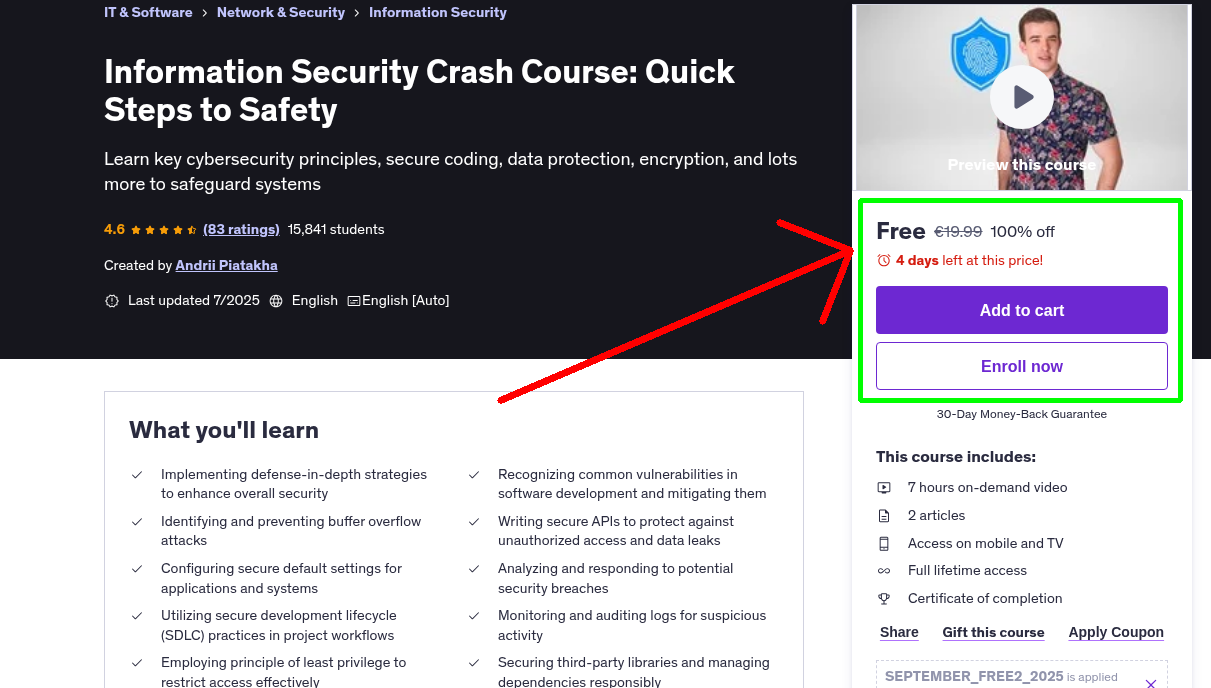
What You'll Learn
- Implementing defense-in-depth strategies to enhance overall security
- Recognizing common vulnerabilities in software development and mitigating them
- Identifying and preventing buffer overflow attacks
- Writing secure APIs to protect against unauthorized access and data leaks
- Configuring secure default settings for applications and systems
- Analyzing and responding to potential security breaches
- Utilizing secure development lifecycle (SDLC) practices in project workflows
- Monitoring and auditing logs for suspicious activity
- Employing principle of least privilege to restrict access effectively
- Securing third-party libraries and managing dependencies responsibly
- Understanding cross-site request forgery (CSRF) and how to mitigate it
- Designing secure error handling and logging mechanisms
- Avoiding common pitfalls in hardcoded credentials and sensitive data exposure
- Ensuring security in microservices architectures
- Safeguarding containers and implementing secure DevOps practices
- Evaluating risks in third-party integrations and supply chain attacks
- Configuring secure cryptographic protocols (e.g., TLS) for data in transit
- Implementing secure password storage techniques (e.g., hashing, salting)
- Conducting static and dynamic code analysis for security flaws
- Building threat models to identify potential attack vectors
- Applying patch management strategies to reduce vulnerabilities
- Managing secrets securely using vaults and key management tools
- Designing security-conscious user interfaces to minimize user-driven errors
- Protecting against insecure deserialization attacks
- Establishing secure policies for mobile device management (MDM)
- Understanding and complying with data protection regulations (e.g., GDPR, CCPA)
- Identifying phishing and social engineering tactics to prevent insider threats
- Securing legacy systems while planning for modernization
- Performing risk assessments and developing mitigation plans
- Educating team members and stakeholders on security best practices
Requirements
- No prior knowledge required
- A computer with internet access
- Eagerness to learn
Who This Course is For
- Anyone Curious About Cybersecurity: With an interest in learning actionable skills to protect digital systems and data
- IT Professionals: Seeking to strengthen their understanding of cybersecurity principles and practices
- Software Developers: Looking to integrate secure coding practices into their workflows and build resilient applications
- Cloud and Mobile Developers: Who need to address specific security challenges in modern application development
- Beginner Programmers: Who want to start their careers with a strong foundation in secure development
- Cybersecurity Enthusiasts: Interested in learning how to identify and prevent common vulnerabilities in software
- QA Engineers: Who need to test applications for security issues and ensure compliance with best practices
- System Architects: Focused on designing secure, scalable, and robust systems
- Product Managers and Tech Leads: Wanting to understand security concepts to guide their teams effectively
- Freelance Developers and Entrepreneurs: Building their own software or managing projects and seeking to minimize security risks
Your Instructor
Experienced Instructor
Professional Educator
An experienced instructor with expertise in this field and a passion for teaching.
Related Courses
More free Network Security courses you might be interested in
 Free 100% Off
Yesterday
Limited Time
Free 100% Off
Yesterday
Limited Time
Network Security
English
Master Servicenow Admin & Development from basic to pro 2026
Master ServiceNow from Basics to Advanced Automation, Hands-On Training for IT Professionals, Compl…
 Free 100% Off
Yesterday
Limited Time
Free 100% Off
Yesterday
Limited Time
Network Security
English
Mastering the Complete Servicenow Administration Course 2026
Master the Core Skills of ServiceNow Administration
 14.99$ None% Off
Yesterday
Limited Time
14.99$ None% Off
Yesterday
Limited Time
Network Security
English
Seguridad en la Nube
Cuando usas la nube también debes proteger tus datos.
 Free 100% Off
28 August 2026
Limited Time
Free 100% Off
28 August 2026
Limited Time
Network Security
English
Start a Career in CyberSecurity - From Zero, Hands-On
From Zero to Hero: Start Your CyberSecurity Career. Start new life changing and highly paid career …
Never Miss a Coupon!
Subscribe to our newsletter to get daily updates on the latest free courses.